

Key Takeaways
- Posture exercises can help develop strength, mobility, and body awareness. [1] [2]
- Regular movement is preferable to maintaining one position for several hours. [3]
- Strengthening the upper back and core can complement posture and movement training. [4]
- Chest and shoulder mobility exercises can form part of a balanced exercise routine. [4]
- Exercises should be performed gradually without forcing painful movements.
- Workplace adjustments and regular movement breaks can support comfortable working positions. [3]
- Persistent pain, numbness, or weakness should be assessed by an appropriate healthcare professional. [6]
Modern lifestyles often involve spending several hours sitting at desks, working on computers, driving, or looking down at mobile devices. Although these activities are common, remaining in one position for extended periods can contribute to muscle fatigue, stiffness, and physical discomfort. Some people also develop habits such as rounding their shoulders, leaning their head forward, or sitting without adequate back support. This is why posture exercises can be a useful addition to a regular fitness routine. They help develop muscular strength, mobility, and awareness of how the body moves and maintains different positions. [1] [2]
Posture refers to how you position and control your body while sitting, standing, and moving. Good posture does not mean keeping your spine perfectly straight or maintaining one rigid position throughout the day. The spine naturally has curves, and comfortable movement involves changing positions rather than holding the same posture continuously. Developing supporting muscle strength, maintaining appropriate mobility, and regularly changing positions can contribute to more comfortable movement habits. [1] [2]
The good news is that improving posture does not always require gym equipment or complicated workouts. Simple exercises targeting the upper back, shoulders, chest, neck, and core can provide a practical starting point. The following seven movements can be performed at home and adapted to different fitness levels. However, exercise selection should depend on
Why Is Good Posture Important?
Your body uses multiple muscles and joints to maintain positions during everyday activities. The muscles around your back, abdomen, hips, and shoulders contribute to stability and movement. Remaining in one position for a prolonged period can contribute to physical fatigue and discomfort, which is one reason regular movement and changes in position are encouraged in workplace ergonomics guidance. [2] [3]
Posture is not simply about appearance. Comfortable positioning can make everyday activities such as working, walking, lifting, and reaching easier to manage. However, there is no single perfect posture that everyone must maintain. Individual anatomy, physical ability, work environment, and movement habits influence how a person naturally positions their body. [1] [2]
7 Best Posture Exercises
1. Wall Angels

Wall angels are a useful exercise for practicing shoulder movement and upper-body control. The movement involves raising and lowering your arms while maintaining a comfortable standing position. It can be included in a general mobility routine for the shoulders and upper back. [4]
Stand with your back facing a wall and your feet slightly away from it. Keep your knees relaxed and position your arms with your elbows bent approximately at shoulder height. Slowly move your arms upward along the wall, then bring them down toward the starting position. Keep the movement controlled and avoid forcing your arms into a position that feels uncomfortable. Some beginners may find it difficult to maintain contact between their arms and the wall. This is not a reason to force the movement. Use a smaller range of motion and gradually increase it as your comfort and mobility improve. The goal is controlled movement rather than achieving a perfect wall position. If you experience shoulder pain, tingling, or unusual discomfort, stop the exercise rather than trying to push through it.
2. Chin Tucks

Chin tucks are a gentle neck movement that can help develop awareness and control around the head and cervical region. Neck movement and strengthening exercises are included in various approaches to managing neck-related movement difficulties, although the appropriate exercise depends on the individual’s symptoms and condition. [5][6]
Sit or stand comfortably with your eyes looking straight ahead. Without tilting your head downward, gently draw your chin backward as though creating a small double chin. Hold the position briefly, then relax and return to your normal position. The movement should be small and controlled. Avoid pushing your head backward forcefully or looking toward the ceiling. You should not experience sharp pain, dizziness, or unusual symptoms while performing the exercise. People experiencing persistent neck pain, numbness, or weakness should seek professional assessment before starting a new neck exercise routine. [5][6]
3. Cat-Cow Stretch

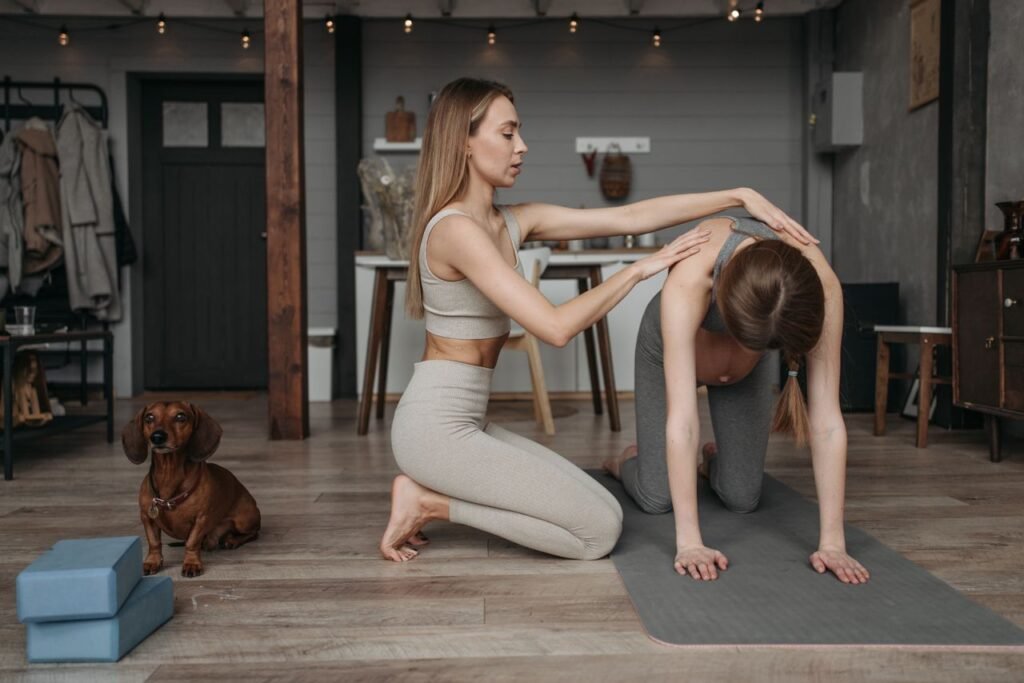
The Cat-Cow movement is a gentle exercise that encourages controlled movement through the spine. It can be incorporated into a mobility routine for people who want to become more comfortable moving their back. General spinal conditioning programs include exercises that work on controlled movement and strengthening of muscles supporting the spine. [4]
Begin on your hands and knees with your hands positioned beneath your shoulders and your knees beneath your hips. Slowly round your back toward the ceiling while allowing your head to follow the movement naturally. Then gradually reverse the movement by bringing your chest forward and gently extending your spine. Move between the two positions without rushing. Breathe naturally and maintain a comfortable range of motion. Avoid forcing your lower back into an extreme position, particularly if you have a history of back discomfort. The purpose of Cat-Cow is not to force the spine into a particular shape. It is to practice controlled spinal movement within a comfortable range.
4. Bird Dog
The bird dog is a bodyweight exercise that challenges core stability, coordination, and control of the trunk. It is a useful addition to general spinal conditioning because it requires the body to maintain a stable position while the opposite arm and leg move. [4]
Start on your hands and knees with your hands underneath your shoulders and knees underneath your hips. Gently engage your abdominal muscles and extend your right arm forward while extending your left leg backward. Keep your hips facing the floor and avoid rotating your body. Slowly return to the starting position and repeat on the opposite side. Beginners can start by lifting only one arm or one leg at a time. This makes it easier to develop control before progressing to the full movement. The goal is to maintain a steady torso rather than lifting your arm and leg as high as possible. Bird dog exercises can complement other core-strengthening movements because they require the abdominal and back muscles to help control body position. [4]

5. Resistance Band Rows
Resistance band rows are useful for strengthening muscles around the upper back and shoulders. Strengthening exercises form part of general conditioning programs designed to develop the muscles that support spinal movement and stability. [4]
Sit or stand with a resistance band secured around a stable anchor point at approximately chest height. Hold one end of the band in each hand with your arms extended comfortably forward. Pull your elbows backward while bringing your shoulder blades gently toward each other. Pause briefly, then slowly extend your arms to return to the starting position. Keep your shoulders relaxed rather than lifting them toward your ears. Avoid leaning backward or using momentum to pull the band. The resistance should be manageable enough to allow controlled repetitions. If you do not have a resistance band, you can begin with another suitable light-resistance exercise. Make sure the band and anchor are secure before starting.
6. Chest Stretch

The chest stretch is a simple mobility exercise that focuses on the muscles at the front of the upper body. Stretching and conditioning exercises can be included in a balanced movement program, provided that they are appropriate for the individual’s physical ability. [4] Stand near a doorway and place one forearm against the doorframe with your elbow comfortably bent. Slowly move your body forward until you feel a mild stretch across the front of your chest. Hold the position while breathing normally, then return to the starting position and repeat on the other side. Do not push your shoulder forward aggressively or twist your body to increase the stretch. The movement should feel gentle and controlled. If you experience shoulder pain, tingling, or unusual discomfort, stop the exercise. People with existing shoulder injuries may need a modified movement selected with professional guidance. Chest stretching should be combined with strengthening and regular movement rather than treated as a complete posture program by itself.
7. Glute Bridges

Glute bridges are a lower-body exercise that primarily targets the gluteal muscles while also involving the hamstrings and muscles that help stabilize the trunk. Strengthening exercises for the hips and surrounding muscles are commonly included in general conditioning programs. [4] Lie on your back with your knees bent and your feet flat on the floor. Keep your arms relaxed beside your body. Gently engage your abdominal muscles and squeeze your glutes as you lift your hips. Pause briefly at the top without excessively arching your lower back, then slowly lower your hips.
Focus on using your glute muscles rather than pushing your lower back into an exaggerated arch. Beginners should start with a comfortable range of motion and gradually increase repetitions as their strength improves. Glute bridges are useful in a balanced exercise routine because posture and movement control involve more than the upper back and shoulders. The hips and lower-body muscles also contribute to everyday movement.
Sources & References
Each numbered reference below corresponds to the citations used in the article.
[1] Harvard Health Publishing – The Importance of Good Posturew
[2] Johns Hopkins Medicine – Posture for a Healthy Back
[3] Occupational Safety and Health Administration (OSHA) – Computer Workstations and Ergonomics
[4] American Academy of Orthopaedic Surgeons (AAOS) – Spine Conditioning Program
[5] University of California, Berkeley – Ergonomics
[6] National Institute of Neurological Disorders and Stroke (NINDS) – Back Pain