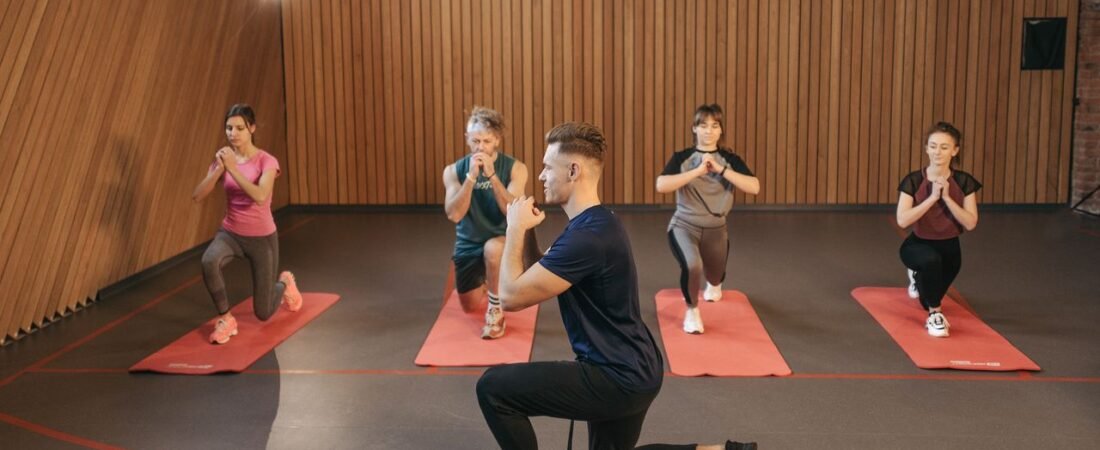
Starting an exercise routine can feel confusing when there are hundreds of workouts, machines, and training programs to choose from. The good news is that beginners do not need a complicated routine to improve their strength and fitness. A small selection of basic exercises can train the major muscle groups, improve movement, build endurance, and create a strong foundation for future workouts. The most effective beginner exercises are usually simple movements that can be performed with good technique and gradually made more challenging. Exercises such as squats, push-ups, lunges, glute bridges, planks, and walking can help develop different aspects of physical fitness without requiring an advanced training background. For beginners, the goal should not be to exercise as intensely as possible. Instead, focus on learning correct movement patterns, building consistency, and allowing your body enough time to adapt. As these exercises become easier, you can gradually increase repetitions, duration, resistance, or difficulty.
Why Exercise Is Important for Beginners
Regular physical activity can support several aspects of health, including muscular strength, cardiovascular fitness, mobility, balance, and everyday physical function. Strength training is particularly useful because stronger muscles can make common activities such as climbing stairs, carrying groceries, lifting objects, or getting up from a chair easier. Exercise can also help beginners develop better body awareness. When you repeatedly practice controlled movements, you become more familiar with how your hips, knees, shoulders, and core work together. This foundation can make it easier to progress to more advanced exercises later. You do not need to spend hours in the gym to begin. A short, consistent routine performed several times per week can be a practical starting point. The key is choosing exercises that match your current ability and progressing gradually rather than trying to do too much too soon.
1. Bodyweight Squats
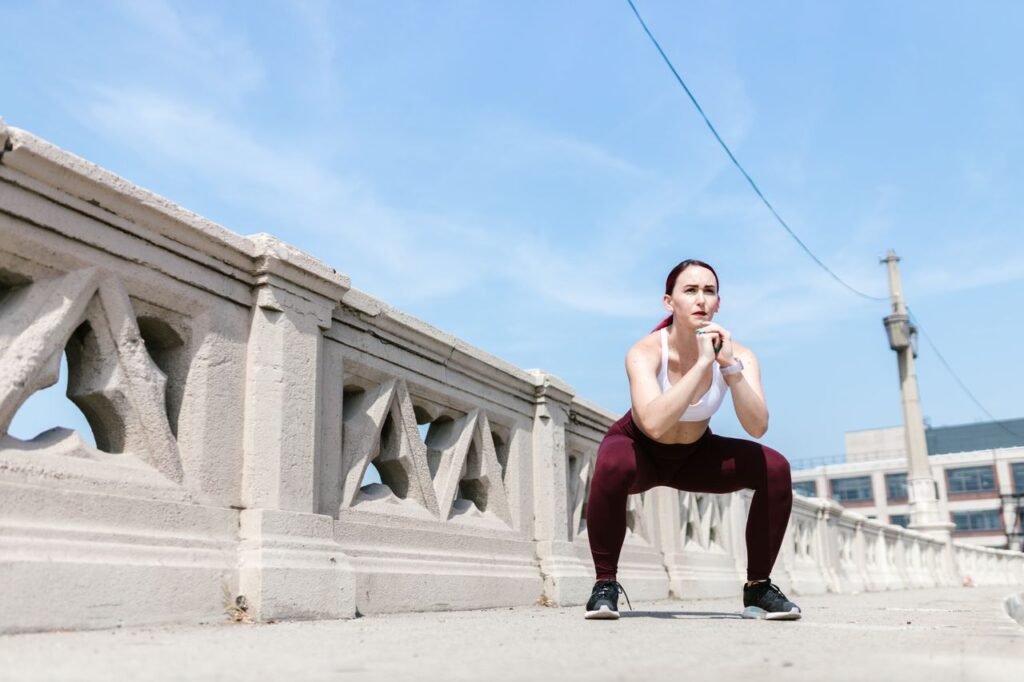
Bodyweight squats are one of the most useful exercises for beginners because they train a movement pattern that you already use in everyday life: sitting down and standing up. The exercise primarily works the muscles of the thighs and hips while also requiring the core and other stabilizing muscles to help maintain control. To perform a squat, stand with your feet approximately shoulder-width apart and keep your chest comfortably upright. Tighten your core gently, push your hips backward, and bend your knees as you lower your body. Go only as deep as you can while maintaining good control, then press through your feet to return to the standing position. Beginners should focus more on movement quality than on achieving a very deep squat. A useful starting point is 2–3 sets of 8–12 repetitions. If balance or mobility is challenging, practicing by sitting toward a sturdy chair and standing back up can make the movement easier to learn.
Beginner Tip
Keep your feet stable and allow your knees to move naturally in line with your feet. Avoid rushing through repetitions. A controlled descent and steady return to standing will help you learn the movement more effectively.
2. Push-Ups
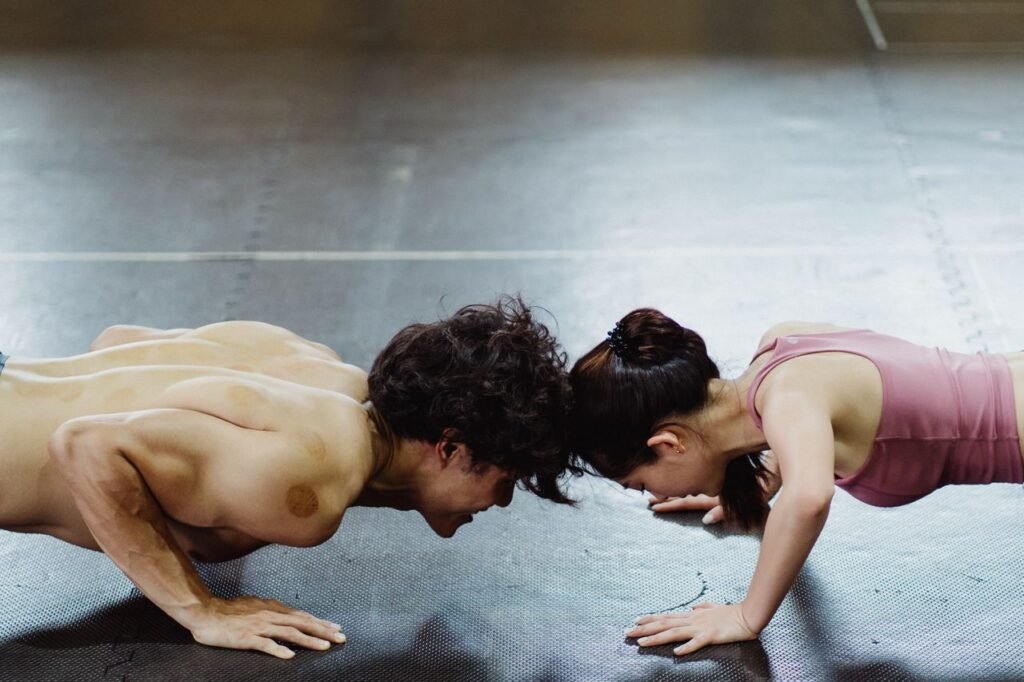
Push-ups are a classic bodyweight exercise that develop upper-body pushing strength while also requiring the abdominal and lower-body muscles to stabilize the body. They mainly challenge the chest, shoulders, and triceps, making them a useful exercise for building functional upper-body strength. Start in a plank position with your hands slightly wider than shoulder-width apart. Keep your body in a relatively straight line and gently engage your core. Bend your elbows and lower your chest toward the floor while maintaining control, then push through your hands to return to the starting position. Traditional push-ups can be difficult for someone who is completely new to exercise. A beginner can start with wall push-ups or incline push-ups, using a stable elevated surface such as a sturdy bench. These variations reduce the amount of body weight being moved while allowing you to practice the same basic movement.
Beginner Tip
Do not sacrifice form just to complete more repetitions. Keep your hips from dropping toward the floor and avoid excessively flaring your elbows. Start with 6–10 controlled repetitions and gradually increase as your strength improves.
3. Reverse Lunges
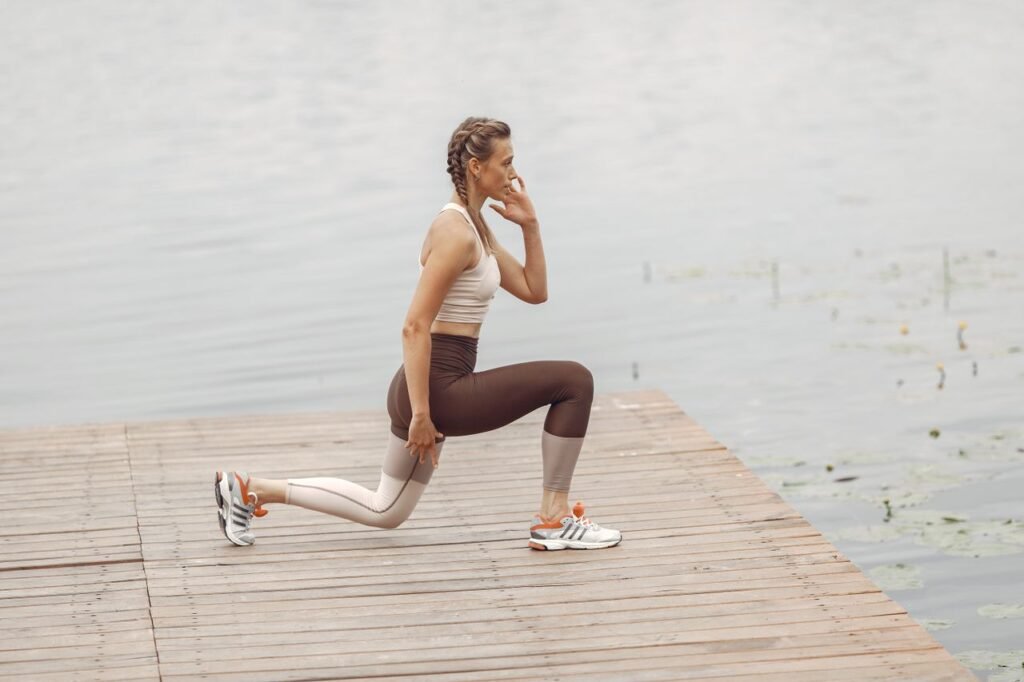
Reverse lunges are an effective lower-body exercise that can improve leg strength, balance, and coordination. Unlike a stationary squat, lunges require each side of the body to work independently, which makes them useful for developing control and stability. Begin by standing upright with your feet comfortably apart. Step one foot backward and lower your body by bending both knees. Keep most of your weight supported through the front leg while maintaining a stable torso. Push through the front foot to return to the starting position, then repeat on the opposite side. For beginners, balance can be more difficult than strength itself. Holding onto a sturdy chair or wall for support can make the exercise easier while you learn the correct movement. Start with approximately 2 sets of 6–10 repetitions per side.
Beginner Tip
Take a comfortable step backward rather than forcing a long stride. Keep the front foot stable and move slowly enough to maintain your balance. If you experience sharp knee pain, stop the exercise and consider getting professional guidance.
4. Glute Bridges
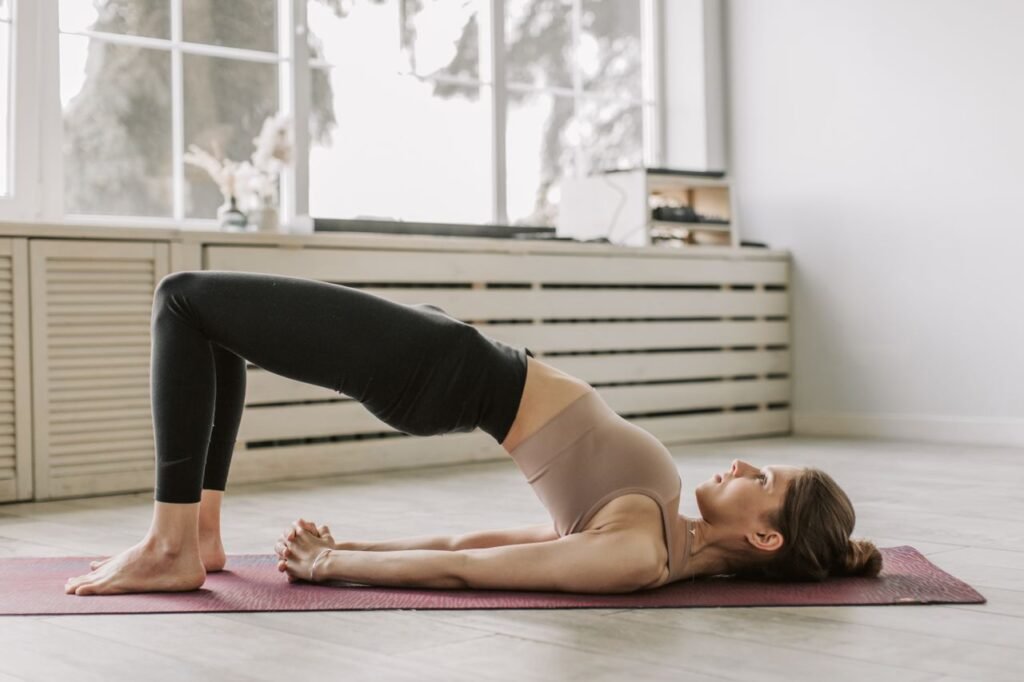
Glute bridges are a beginner-friendly exercise that focuses on the muscles around the hips and buttocks while also requiring abdominal control. They are particularly useful for beginners who spend significant amounts of time sitting because they provide an opportunity to practice controlled hip extension. Lie on your back with your knees bent and your feet flat on the floor. Position your feet comfortably apart and keep your arms resting beside your body. Tighten your abdominal muscles gently, press through your feet, and lift your hips until your body forms a comfortable line from your shoulders toward your knees. Pause briefly at the top, then slowly lower your hips. The movement should come primarily from your hips rather than from excessive arching of your lower back. Start with 2–3 sets of 10–15 repetitions and concentrate on controlled movement throughout each repetition.
Beginner Tip
You do not need to lift your hips as high as possible. A smaller, controlled movement is preferable if raising higher causes your lower back to arch excessively.
5. Plank
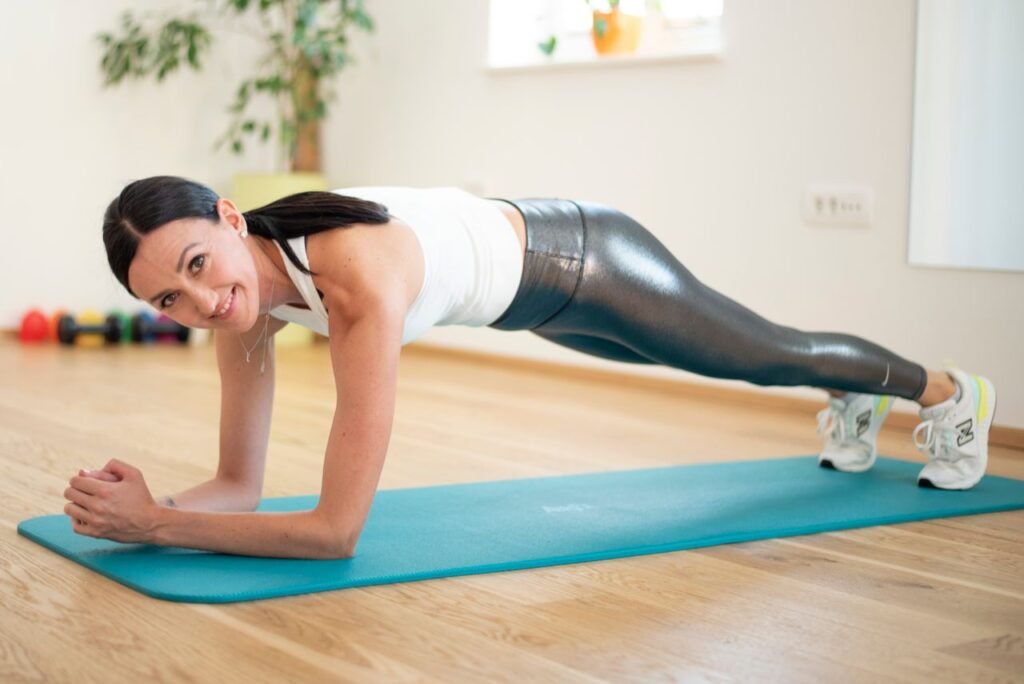
The plank is a simple isometric exercise that trains the muscles responsible for stabilizing your trunk. Instead of repeatedly moving through a range of motion, you hold a controlled position while your abdominal and other stabilizing muscles work to maintain alignment Start by placing your forearms on the floor with your elbows approximately beneath your shoulders. Extend your legs behind you and support your body through your forearms and feet. Keep your head, shoulders, hips, and legs in a comfortable alignment while breathing normally. Beginners do not need to hold a plank for several minutes. Start with 15–30 seconds, rest, and repeat for 2–3 sets. As your ability improves, you can gradually increase the holding time.
Beginner Tip
Think about keeping your abdominal muscles gently engaged rather than trying to squeeze your entire body as hard as possible. If your hips begin to sag or rise significantly, end the set and rest.
6. Walking
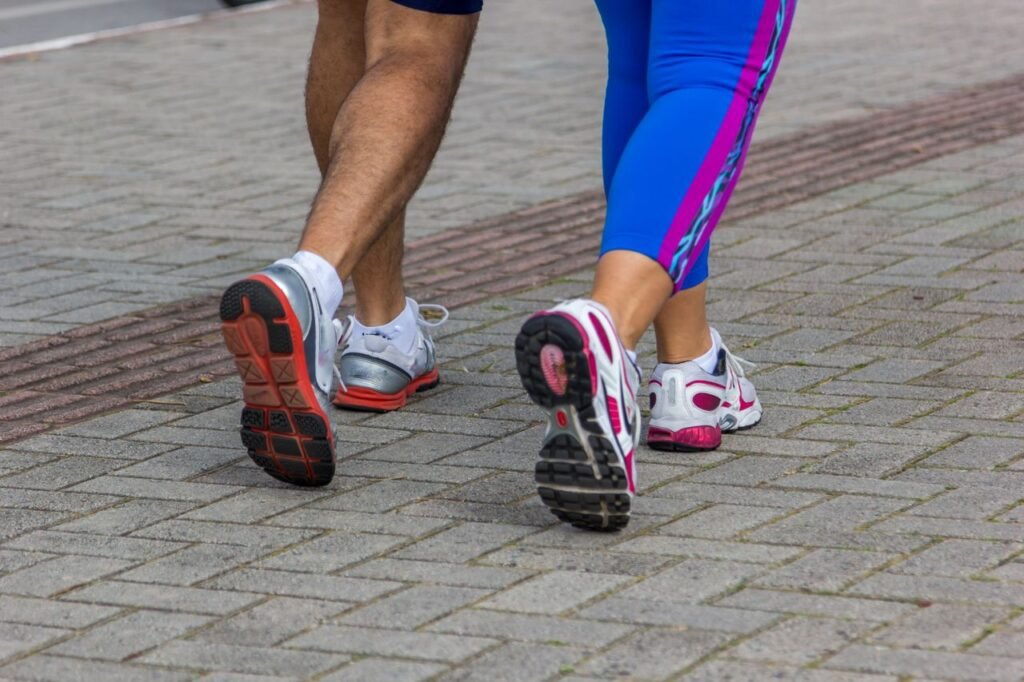
Walking may look simple compared with traditional strength exercises, but it is one of the most accessible forms of physical activity for beginners. Regular walking can help build basic cardiovascular endurance, increase daily movement, and make the transition into a more active lifestyle easier. Beginners can start with a comfortable pace and gradually increase either the duration or intensity. Once regular walking becomes easier, a brisk pace can provide a greater cardiovascular challenge. You can also divide your walking into shorter sessions during the day if completing one long session is difficult. A practical starting point might be 15–20 minutes of walking, followed by gradual increases based on your fitness and schedule.
Beginner Tip
Focus on consistency rather than speed. Comfortable walking is an excellent starting point, while brisk walking can be introduced gradually as your endurance improves.
A Simple Beginner Workout Routine
You do not need to perform all six exercises at maximum effort. A balanced beginner routine can combine strength exercises with walking and adequate recovery.
| Exercise | Starting Point |
| Bodyweight Squats | 8–12 reps |
| Push-Ups | 6–10 reps |
| Reverse Lunges | 6–10 reps per side |
| Glute Bridges | 10–15 reps |
| Plank | 15–30 seconds |
| Walking | 15–20 minutes |
Start with 1–2 rounds of the strength exercises and rest between movements. Beginners can perform strength-focused workouts around 2–3 days per week, depending on their fitness level and recovery. Walking can be included on other days or added to the same routine. The important principle is progression. When an exercise becomes consistently easy, you can gradually add a few repetitions, increase the duration, add resistance, or move to a more challenging variation. Small improvements over time can produce meaningful changes in strength and fitness.
How to Exercise Safely as a Beginner
Good technique should always come before speed, repetitions, or heavier resistance. Begin each workout with several minutes of easy movement to gradually prepare your body. During the workout, breathe normally and avoid holding your breath unnecessarily. Some muscle tiredness and mild discomfort from exertion can be normal, but sharp pain is not something you should try to push through. Beginners should also give their bodies enough recovery time between challenging sessions. If you have a chronic health condition, a recent injury, or concerns about whether a particular exercise is appropriate for you, speak with a qualified healthcare professional before beginning a new exercise program.
sources
- Centers for Disease Control and Prevention (CDC) — Physical Activity Basics
https://www.cdc.gov/physical-activity-basics/ - U.S. Department of Health and Human Services — Physical Activity Guidelines for Americans
https://health.gov/our-work/nutrition-physical-activity/physical-activity-guidelines - American College of Sports Medicine (ACSM) — Physical Activity Guidelines
https://www.acsm.org/education-resources/trending-topics-resources/physical-activity-guidelines - Mayo Clinic — Exercise and Fitness
https://www.mayoclinic.org/healthy-lifestyle/fitness - American Council on Exercise (ACE) — Exercise Library
https://www.acefitness.org/resources/everyone/exercise-library/